
Trenchless Pipe Lining (CIPP)
A cured-in-place liner forms a new pipe inside the old one. Done where it fits, it saves the yard, the driveway, and about a week of disruption.
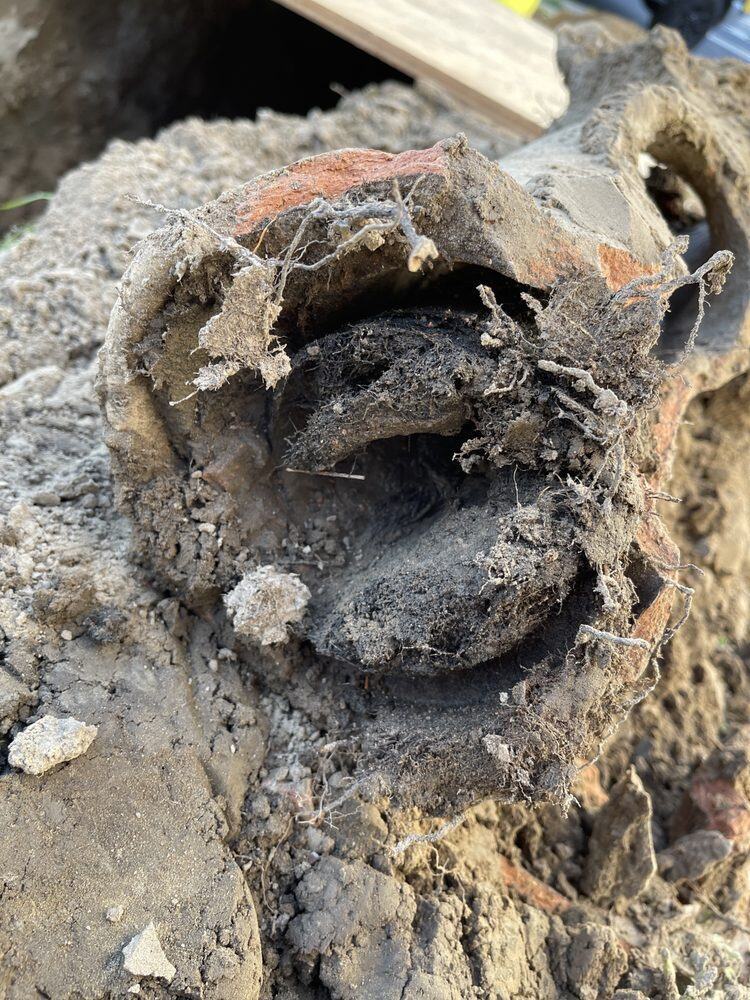
Cured-in-place pipe lining pulls a resin-saturated liner through the damaged pipe, inflates it against the existing wall, and cures it into a continuous new pipe. There are no joints for roots to enter, and the whole thing happens through existing cleanouts or a single small access pit.
The honest part: lining doesn't fit every line. A pipe that's fully collapsed has nothing to line against. Severe offsets, back-pitched sections holding water, or a line that's already been reduced in diameter by scale can all rule it out — and lining does slightly reduce inside diameter, which matters on a line that was marginal to begin with. We camera the line first and tell you plainly whether you're a candidate. If you're not, we'll say so rather than lining something that will fail.
When this is likely your problem
What's included — and what isn't
In the quoted price
- Camera inspection to confirm the line is a lining candidate
- Cleaning and preparation of the host pipe before the liner goes in
- Liner installation and curing through existing access points
- Reinstatement of any branch connections along the lined section
- Post-cure camera verification of the finished liner
Quoted separately
- Excavation for an access pit where no usable cleanout exists
- Spot excavation to repair a fully collapsed section before lining can proceed
- Permits, city inspection, and right-of-way fees
- Landscaping or hardscape restoration around any access point we do open
- Work on the utility-owned portion of the line
How this job gets priced
Lining is priced by the length and diameter of the run and by how much access work is needed. We won't quote it before the camera inspection, because whether your line is even a candidate is the first question. Where both lining and open-cut replacement are viable, you get both numbers — lining usually costs more per foot but far less in restoration, and which one wins depends entirely on what's on top of your line.
What the work involves
Camera and assess
We confirm the pipe's condition, alignment, and diameter to see whether lining is realistic at all.
Clean the host pipe
The old pipe gets scoured back so the liner bonds to pipe wall, not to buildup.
Install and cure
The liner is pulled or inverted into place, inflated, and cured into a continuous new pipe.
Reinstate and verify
Branch connections are reopened and a final camera run confirms the result.
Questions about trenchless pipe lining (cipp)
How long does a cured liner last?
Manufacturers typically publish design lives measured in decades for CIPP liners installed correctly in a suitable host pipe. We'd rather point you to the specific product's published figures than quote a number we can't stand behind, and we'll tell you which liner system we'd be using so you can read those yourself.
Does lining make my pipe narrower?
Slightly, yes — the liner takes up some inside diameter. In most residential laterals that reduction is immaterial because the smoother liner wall carries flow at least as well as scaled old pipe. On a line that's already undersized, though, it's a real consideration and we'll raise it rather than hoping you don't ask.
Can you line a collapsed pipe?
No. Lining needs an intact host pipe to form against. A fully collapsed section has to be excavated and replaced, though sometimes that's a short spot repair followed by lining the rest of the run. The camera inspection is what tells us which situation you're in.
Is trenchless always cheaper than digging?
No, and anyone who says so is selling. Per foot, lining usually costs more than open-cut pipe. It wins on total cost when there's a driveway, patio, mature trees, or a finished yard above the line, because restoration is where open-cut gets expensive. On an open lawn with a shallow line, digging is often the better value.
Ready to find out what's going on?
Call and describe the symptoms. You'll get an honest read before anyone drives out.